400 kms
Approximate length of the Hindon river which originates in the Shivalik range, in Pur Ka Tanda village in Saharanpur, Uttar Pradesh and confluences with the Yamuna near Momnathal in Sector 151, Noida.
7
Number of districts in Uttar Pradesh that the river traverses through - Saharanpur, Muzaffarnagar, Shamli, Meerut, Baghpat, Ghaziabad and Gautam Budh Nagar - before emptying into the Yamuna.
300 km
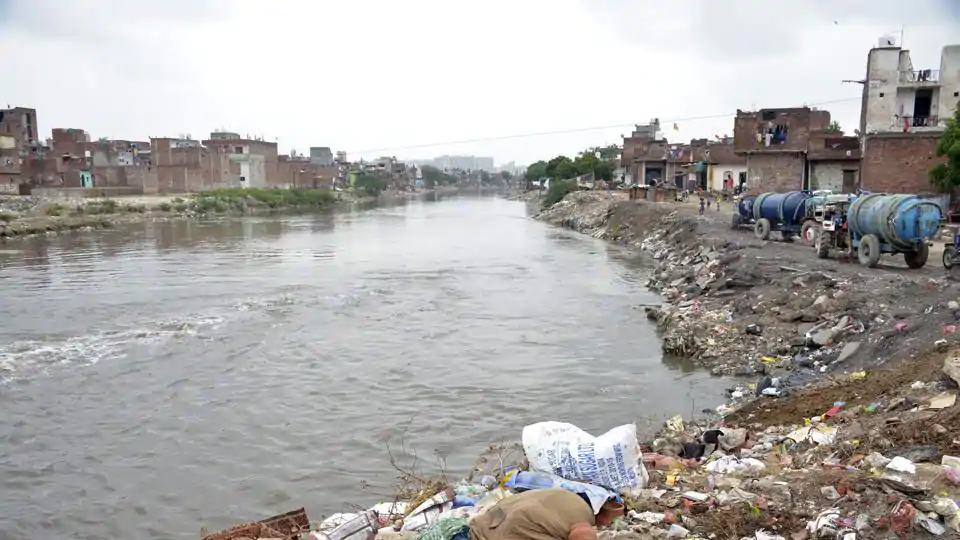
Length of the most polluted stretches of the Hindon – from Saharanpur to Ghaziabad. The water quality in this stretch is neither fit for drinking nor for bathing. The condition is so bad that the river, between Ghaziabad and Saharanpur, has no aquatic life left. Due to the high levels of pollution, Hindon has earned the status of “dead river”. At best, its water can only be used for industrial cooling or controlled waste disposal, but unfortunately, it is also used for irrigation for nearby fields, a practice which results in pollutants entering the food chain.
674 million litres
399.693 MLD
Sewage and effluent discharged from Ghaziabad district alone. The 10 drains in Ghaziabad that empty into the Hindon are identified as Karhera drain, Hindon Vihar drain, Kaila Bhatta drain, Arthala drain, Sarvodaya Nagar drain, Rahul Vihar drain, Indirapuran drain, Dasna drain and Nandgram drain near Petrol Pump besides the one near City Forest’s main gate.
93
Number of locations in the catchment areas of the river where the groundwater quality has also been adversely affected. Groundwater has been found to be contaminated at these locations on one or more parameters such as sulphate, fluoride and heavy metals such as cadmium, copper, lead, iron, nickel, zinc and mercury.
Jun 2019
Aug 2019
UPPCB moots a plan related to sewage management, industrial waste management, solid waste and flood prone zone management, and action plans for ecological flow and ground water management.
Feb 2020
The Urban Development Department of Uttar Pradesh rope in a Noida-based company for drawing up the detailed project report (DPR) for the rejuvenation of the river. “We have requested the inclusion of several points in the DPR. They are: intercepting of all major and minor drains, treatment of intercepted waste water, channelling profile, course correction and strengthening of riverbanks, riverbanks beautification with development of walkways, cycle tracks, tree avenues, and landscaping, and a comprehensive solid waste and sewage sludge management in Ghaziabad and Noida.” - Ghaziabad District Magistrate Ajay Shankar Pandey.
Nov 2020
Ghaziabad Municipal Corporation has started a pilot project that will bio-remedial method to improve the quality of the waste water discharge from the Arthala drain into the Hindon river. Under the bio-remedial method, friendly bacteria, fungi, yeasts or algae are mixed in a solution and released into the drain. It acts on inorganic compounds and harmful microbes by either destroying them or changing their composition, thus improving dissolved oxygen (DO) levels and improving the water quality of the drain.
The pilot project has been initiated on directions of National Green Tribunal (NGT) and tenders for other drains are likely to be be floated soon.
Nov 2020
Noida Authority connects a master sewer pipeline that carries waste water from sectors 74, 75, 76, 77, 80, 81, 82, 83, 84, Hosiery complex and Phase 2 to a Sewage Treatment Plant in Sector 123. 30 MLD of sewage will now be treated before being released into the Hindon.
 Last Modified: 27-Nov-2020 7:03 AM