9 decades
Over 90+ years of its chequered history, what is now known as the Tempe Lands, has had many forms - from shale quarry to greyhound track to becoming the infamous ‘Tempe Tip’.
1920s
decade when the land was a shale quarry, converted to a greyhound track in the 1940s and then yet again was used as landfill for commercial, domestic and trade waste from around Sydney until the mid-1970s. The pits were known colloquially as 'Tempe Tip'.
2004
The then-Marrickville Council began work on remediation of the site. This included creating three sedimentation ponds for treating stormwater and planting a diverse range of species to create native wildlife havens.
2006
In January of this year, the $17 million Tempe Lands remediation project was completed, the Mayor of Marrickville was quoted as saying that, “Birdlife that has not been seen in the area for some time is already starting to return to the wetlands.”
2011
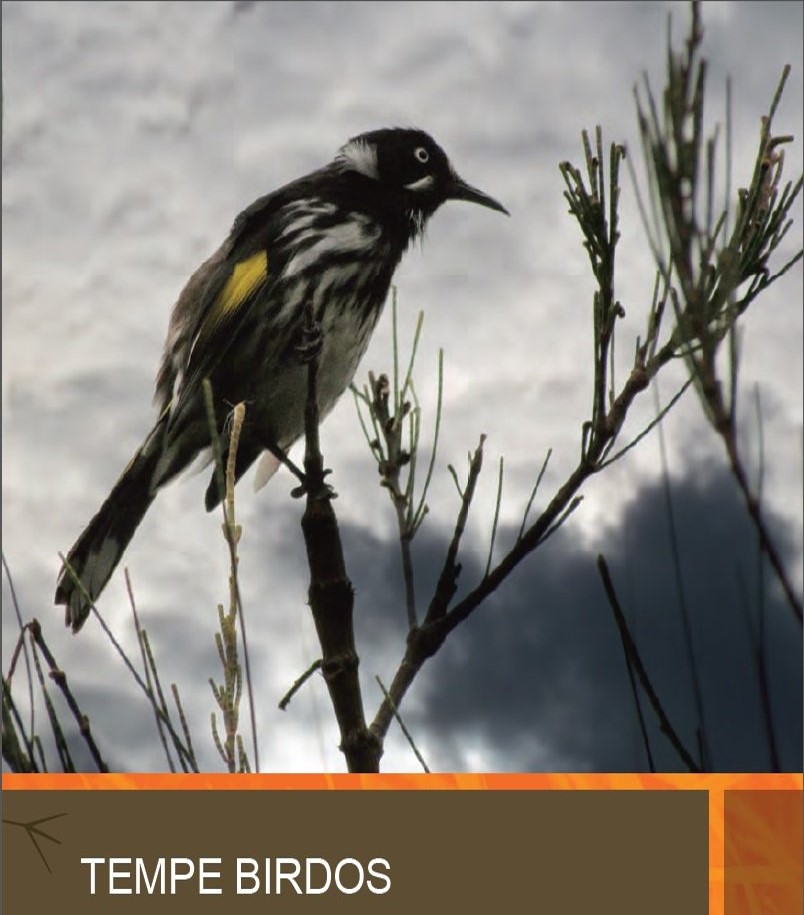
the remediation project was so successful, Tempe Lands was identified as one of seven Priority Biodiversity Areas. The volunteer bird watching group, Tempe Birdos, was formed in November of this year and since then has met monthly for an early morning bird walk and survey at the Tempe site.
100
In Aug 2016, Tempe Birdos recorded their 100th species – a Little Egret. The groups has also recorded a growing number of frog species, as well as an Echidna sighting, Blue-tongued lizards, water skinks, eels, flying foxes, a fox and the occasional goldfish.
110
In March of 2017, the group recorded their 110th species. Tempe Birdos member Virginia Niven said that three new species were sighted in Tempe Lands during their March survey alone - Eastern Rosella, Musk Lorikeet and Spangled Drongo.
13 years
Period over which a dumping ground has been transformed into a thriving biodiversity area. “Tempe Lands has become a fantastic example of how natural area restoration can bring back biodiversity to the inner city.” - Richard Pearson, Administrator of Inner West Council.
 Last Modified: 02-Apr-2017 10:52 AM